Awọn ọrọ Pace — Iran Isodipupo
Lílóye pé iyára tí olórí kan fi ń kọ́ àwọn ẹlòmíràn ni ó ń mú kí gbogbo ìṣísẹ̀ náà yára sí ìsàlẹ̀. Èyí kì í ṣe ọgbọ́n lásán ni — ó jẹ́ ìran fún ìsọdipúpọ̀: àwọn iṣẹ́ díẹ̀díẹ̀ àti dídíjú ni a ń daakọ tí a sì ń dínkù sí gbogbo ìran tí ń bọ̀, nígbà tí iyára tí ó rọrùn, tí a lè tún ṣe, ń mú kí àlá ìsọdipúpọ̀ àwọn ọmọ-ẹ̀yìn wà láàyè fún àwọn ìran tí ń bọ̀.
Ṣé Erin ni ọ́ tàbí Ehoro?
Two pictures of the difference between addition and multiplication — and why the pace a leader sets today decides whether the next ten generations reproduce slowly, or explosively.
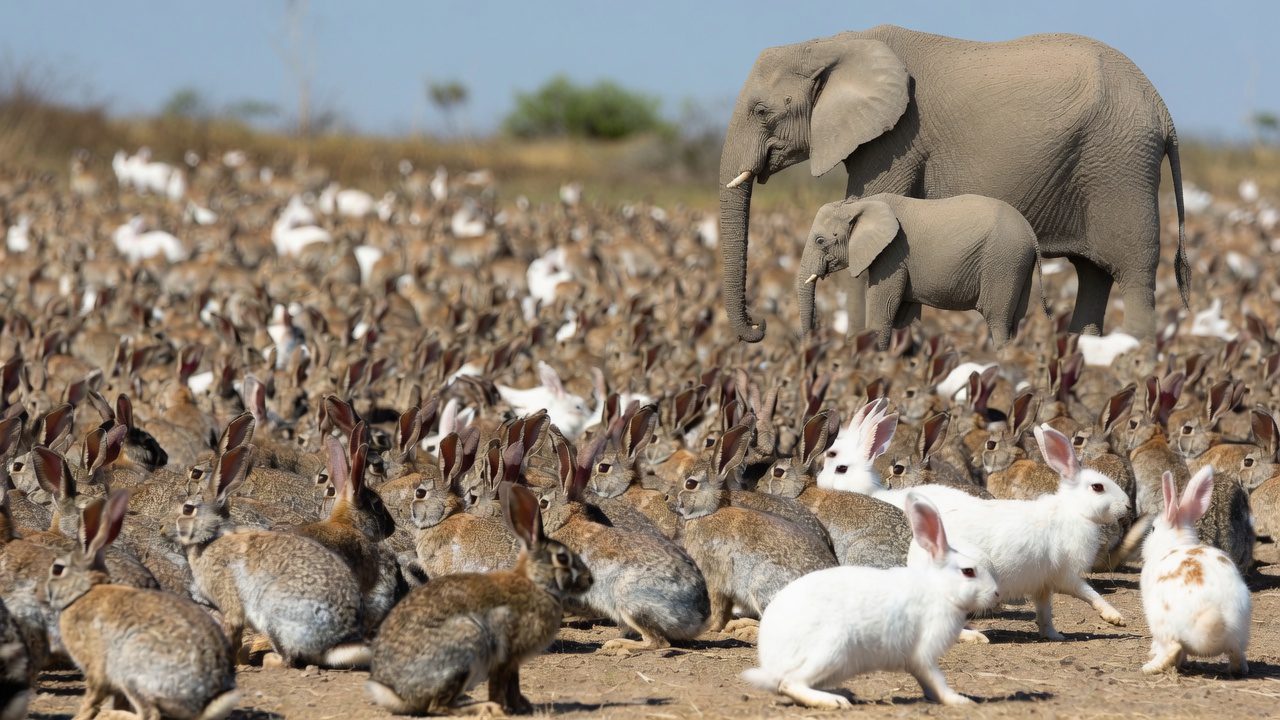
- Starts breeding at 10–11 years old
- oyun oṣù méjìlélógún
- 4–9 years between calves
- Àwọn ìbejì ṣọ̀wọ́n gidigidi
One leader, one disciple at a time — only ever as deep as one person can personally reach. Slow, complicated, dependent on the one. This is addition.
- Bẹrẹ ibisi ni oṣu mẹfa
- Ìlóyún ọjọ́ ọgbọ̀n
- 4–12 babies per litter
Obìnrin kan àti ọmọ rẹ̀ lè bímọ ní ti ìmọ̀. 50,653 ni ọdun mẹta, mílíọ̀nù mọ́kàndínlọ́gọ́rin ní ọdún márùn-ún, àti bilionu 64 ní ọdún méje.
Every disciple becomes a disciple-maker, who makes another, who makes another — simple and reproducible enough that anyone can pass it on. This is multiplication.
Kílódé tí ìyípadà náà fi ṣe pàtàkì fún ọdún 2033
2033 marks roughly 2,000 years since Jesus gave the Great Commission. That can feel impossibly far from “reaching the whole world” — until you remember that multiplication, not addition, is how small things become large fast.
Picture one disciple-maker who disciples two people a year who become disciple-makers themselves — and the pattern repeats:
Ọdún 5: 32 • Ọdún 10: 1,024 • Ọdún 20: over 1 million • Ọdún 30: over 1 billion • Ọdún 33: ju iye awon eniyan aye lo.
That is not a prediction of exactly how or when — only God knows the day or the hour. It is a picture of what is mathematically possible when multiplication replaces addition. It is why a process only a gifted leader can reproduce quietly caps a movement at one generation, while a pace ordinary people can copy keeps the chain unbroken for 10, 20, 30 generations — Ilé sí ilé. Abúlé sí abúlé. Orílẹ̀-èdè sí orílẹ̀-èdè. Kọntínẹ́ǹtì sí kọ́ntínẹ́ǹtì. Títí gbogbo ayé yóò fi mọ̀.